> For the complete documentation index, see [llms.txt](https://docs.prodigybot.io/llms.txt). Markdown versions of documentation pages are available by appending `.md` to page URLs; this page is available as [Markdown](https://docs.prodigybot.io/trade-monitor/general-buttons.md).
# General buttons
## Refresh and switches
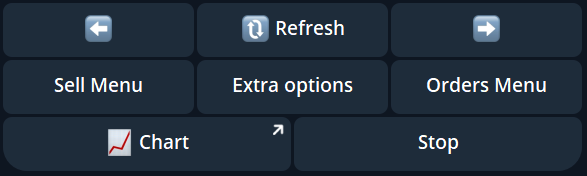
.png?alt=media) The monitor can be forced to update at any point by using this button. The monitors by themselves update automatically every few seconds, but this button can help update it if it has a lot of volume and we want the exact current price.
.png?alt=media) The arrow buttons just switch between your current monitors, if you have more than one.
## Menus
.png?alt=media) Shows or hides the sell menu options. Hiding it is useful if you don't want to accidentally sell something by pressing the wrong button.
See: **Monitor Sell menu**
.png?alt=media) Brings up the orders menu. From there you can create triggers to sell or buy when certain conditions are met.
See: **Monitor Orders menu**
.png?alt=media) Shows some extra options
You can edit the slippage and anti-rug from here.
## Extra buttons
.png?alt=media) Opens the Dexscreener chart associated with this pair.
.png?alt=media) This button discards this monitor or closes it if we only have one. You will need to open the contract menu and press the Monitor again to reopen this.
.png?alt=media) This allows you to use a custom private RPC to prevent your buys and sales (primarily on the Ethereum blockchain) from suffering a sandwich attack.
These attacks are usually performed by bots and consist in sequentially buying/selling right before you do for a large amount, and then selling/buying right after, essentially draining you for the difference between the slippage you set and the amount for which you buy/sell.
.png?alt=media)